| Key Facts — 19th-Century France | Detail |
|---|---|
| Bourbon Restoration: 1814–1830 | |
| July Monarchy: 1830–1848 | |
| Second Republic: 1848–1852 | |
| Second Empire (Napoleon III): 1852–1870 | |
| Third Republic: 1870–1940 | |
| Franco-Prussian War: 1870–1871 | |
| Paris Commune: March–May 1871 | |
| Belle Époque: c. 1871–1914 | |
| Eiffel Tower built: 1887–1889 |
No century was more turbulent for France than the 19th. Between 1814 and 1871, France experienced two monarchies, two republics, two empires, three revolutions, a foreign occupation, a civil war, and the traumatic loss of Alsace-Lorraine. Yet from this chaos emerged the modern France we recognise today — the Paris of boulevards and cafés, the culture of Impressionism and Art Nouveau, the republic of Liberté, Égalité, Fraternité (Liberty, Equality, Fraternity) that has endured, with interruptions, to the present day.
The Bourbon Restoration (1814–1830)
After Waterloo, the allied powers restored the Bourbon monarchy. Louis XVIII (brother of the executed Louis XVI) returned to a France that had been permanently transformed by the Revolution and Napoleon.
Louis XVIII was shrewd enough to accept a constitution — the Charte constitutionnelle (Constitutional Charter) — granting a parliament, press freedom, and legal equality. But his successor, Charles X (r. 1824–1830), was not so wise. An ultra-royalist who yearned for the Ancien Régime, Charles attempted to restore noble privileges, compensate émigrés, and impose press censorship.
The July Revolution (1830)
In July 1830, Charles X issued ordinances dissolving parliament and restricting the press. Paris exploded. In three days — les Trois Glorieuses (the Three Glorious Days) (27–29 July) — barricades went up across the city, the army defected, and Charles X fled to England.
The revolution of 1830 established the Monarchie de Juillet (July Monarchy) under Louis-Philippe, the "Citizen King," who ruled with bourgeois support until he too was overthrown.
The Second Republic and Napoleon III (1848–1870)
The Revolution of 1848
In February 1848, economic crisis and political frustration produced another revolution. Louis-Philippe abdicated, and France proclaimed the Second Republic with universal male suffrage — the first large country in Europe to do so.
In the presidential election of December 1848, the winner was Louis-Napoléon Bonaparte — Napoleon's nephew. He won by a landslide, riding on the magic of the Bonaparte name. In 1851, he staged a coup d'état, and in 1852 he proclaimed himself Napoleon III, Emperor of the French. The Second Empire had begun.
Haussmann's Paris
Napoleon III's most visible legacy was the transformation of Paris. He appointed Baron Haussmann as prefect of the Seine and gave him almost unlimited powers to demolish and rebuild.
Between 1853 and 1870, Haussmann tore through medieval Paris with ruthless efficiency. He demolished thousands of buildings, displaced hundreds of thousands of residents, and created the Paris we see today:
- The grands boulevards — wide, tree-lined avenues radiating from monumental intersections, designed for elegance, traffic flow, and (not incidentally) to prevent barricade-building
- Parks — the Bois de Boulogne, Bois de Vincennes, Parc des Buttes-Chaumont, Parc Montsouris
- Infrastructure — a modern sewer system, aqueducts, gas lighting, market halls (Les Halles)
- Uniform architecture — the cream limestone buildings with zinc roofs, iron balconies, and regulated heights that define Parisian style
Haussmann's Paris was simultaneously an urban masterpiece and an act of social engineering that expelled the working class from the city centre. Both aspects remain controversial.
The Franco-Prussian War (1870–1871)
Napoleon III's downfall came through war. In July 1870, Prussian Chancellor Bismarck manoeuvred France into declaring war on Prussia. The French army was outgunned, outmanoeuvred, and utterly defeated. At the Battle of Sedan (1 September 1870), Napoleon III himself was captured along with 100,000 troops.
Paris endured a brutal four-month siege. Parisians ate horses, cats, dogs, and rats. The zoo animals were slaughtered for food. When the city finally surrendered in January 1871, France ceded Alsace and most of Lorraine to the new German Empire and paid an indemnity of 5 billion francs. The humiliation burned into French consciousness for two generations.
The Paris Commune (1871)
The armistice provoked fury in Paris. In March 1871, the radical Parisian working class established the Commune de Paris (Paris Commune) — a socialist government that controlled the city for seventy-two days.
The Commune introduced radical reforms: free secular education, workers' self-management, separation of Church and State, gender equality. But the national government at Versailles, under Adolphe Thiers, besieged Paris and stormed the city in May 1871. The suppression — la Semaine sanglante (Bloody Week) — was savage: an estimated 10,000–20,000 Communards were killed, many executed without trial.
The Commune became a foundational myth of the international left. Marx analysed it. Lenin invoked it. Its memory still divides French politics.
The Third Republic (1870–1940)

From the ashes of defeat and civil war, France built its most enduring form of government: the Third Republic (1870–1940). It was born in crisis, plagued by scandal, and mocked by its enemies — but it lasted seventy years and shaped modern France.
The Republic Takes Root
The Republic's early years were a struggle for survival. Monarchists held a majority in the National Assembly and might have restored the monarchy — but the Bourbon and Orleanist claimants could not agree, and the moment passed. By 1879, republicans controlled both chambers and the presidency.
Jules Ferry and Public Education
The Republic's most transformative figure was Jules Ferry, who as education minister (1879–1883) established free, compulsory, secular primary education — l'école laïque (secular schooling). The instituteurs (schoolteachers) — the "black hussars of the Republic" — became missionaries of republicanism, nationalism, and the French language, displacing regional languages and forging a unified national identity.
The Dreyfus Affair (1894–1906)
The defining crisis of the Third Republic was the Affaire Dreyfus (Dreyfus Affair). In 1894, Captain Alfred Dreyfus — a Jewish officer — was wrongly convicted of spying for Germany and sentenced to Devil's Island. When evidence emerged that Dreyfus was innocent and the real spy was protected by the army brass, France split in two.
Dreyfusards (led by Émile Zola, whose open letter J'accuse…! (I accuse…!) electrified the nation) demanded justice and defended republican values. Anti-Dreyfusards — the army, the Church, monarchists, and antisemites — defended the honour of the military and the social order.
Dreyfus was eventually vindicated (pardoned 1899, fully exonerated 1906), but the affair reshaped France: it strengthened republicanism, weakened the Catholic Church's political influence, and directly led to the 1905 law separating Church and State.
The Belle Époque (c. 1871–1914)
The decades between the Commune and World War I are remembered as the Belle Époque (Beautiful Era) — a golden age of prosperity, innovation, and joie de vivre. The name is partly nostalgic (coined after the devastation of 1914–1918), but the era's achievements were real and extraordinary.
The Eiffel Tower (1889)
Built as the centrepiece of the 1889 World's Fair — celebrating the Revolution's centenary — Gustave Eiffel's iron tower was the tallest structure in the world for forty-one years. Artists and writers despised it ("a metal asparagus," Maupassant called it). Parisians adored it. It became the symbol of Paris and of modern France.
Art and Culture
The Belle Époque produced:
- Impressionism — Monet, Renoir, Degas, Cézanne (see
Impressionism ) - Post-Impressionism — Van Gogh, Gauguin, Toulouse-Lautrec
- Art Nouveau — Hector Guimard's Paris Métro entrances
- Literary giants — Proust began In Search of Lost Time; Zola's Rougon-Macquart cycle documented French society in twenty novels
- Cinema — the Lumière brothers screened the world's first films in 1895
- Music — Debussy, Ravel, Satie
Science and Technology
- The Pasteur Institute (1888) and Louis Pasteur's germ theory
- Marie and Pierre Curie's discovery of radium (1898)
- The Paris Métro opened (1900)
- The Wright Brothers' influence on French aviation pioneers
Paris as World Capital
During the Belle Époque, Paris became the undisputed cultural capital of the world. The great exhibitions of 1889 and 1900 drew millions. Montmartre teemed with artists. The grands magasins (department stores) — Le Bon Marché, Galeries Lafayette, Printemps — invented modern retail. The café culture of the Left Bank incubated every artistic and intellectual movement.
Then, in August 1914, the Belle Époque ended. The lights went out across Europe.
- 1814— Bourbon Restoration; Louis XVIII
- 1830— July Revolution; Louis-Philippe
- 1848— February Revolution; Second Republic; universal male suffrage
- 1851— Louis-Napoléon's coup d'état
- 1852— Second Empire proclaimed (Napoleon III)
- 1853–1870— Haussmann rebuilds Paris
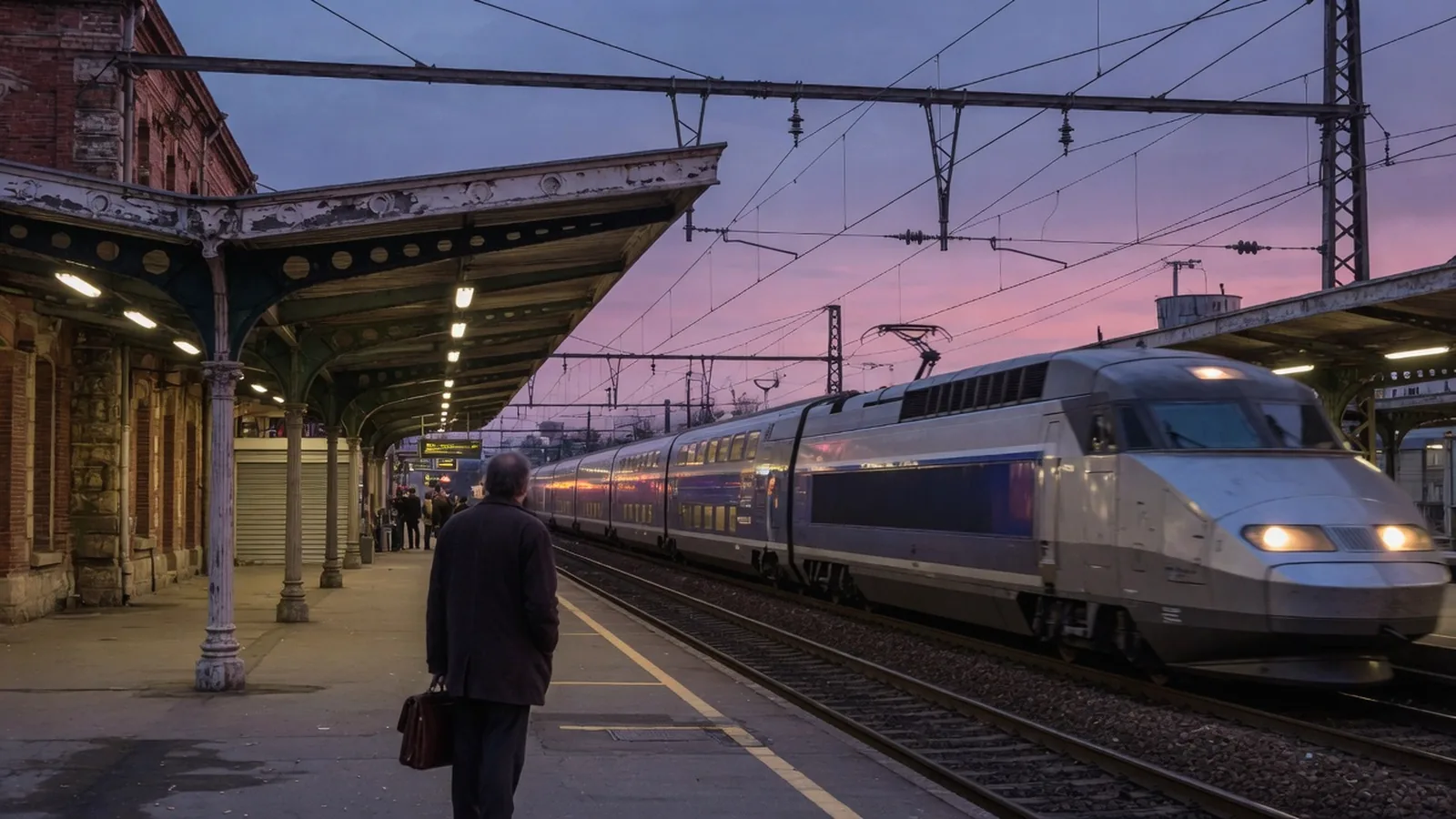
- 1870— Franco-Prussian War; Sedan; fall of Napoleon III
- 1871— Paris Commune; loss of Alsace-Lorraine
- 1881–1882— Jules Ferry laws; free, compulsory, secular education
- 1889— Eiffel Tower built; World's Fair
- 1894— Dreyfus convicted; Affair begins
- 1895— Lumière brothers' first film screening
- 1898— Zola's J'accuse; Curies discover radium
- 1905— Law separating Church and State
- 1906— Dreyfus exonerated
- 1914— World War I begins; Belle Époque ends
The 19th century forged modern France through fire and brilliance. The 20th would test it almost to destruction.