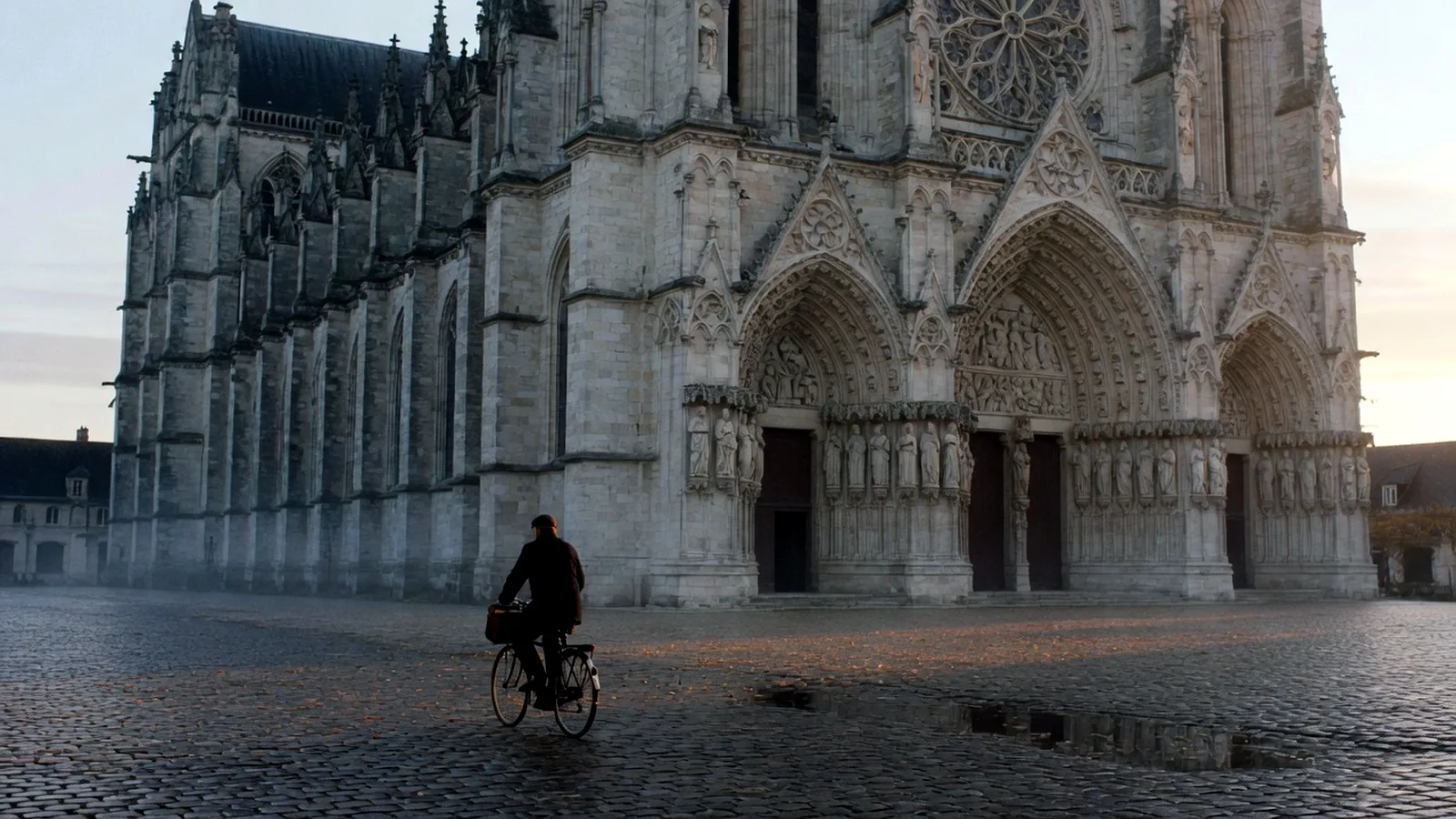
| Quick Facts | Detail |
|---|---|
| Built: 1163–1345 (main construction), with restorations by Viollet-le-Duc (1844–1864) | |
| Style: French Gothic | |
| Height: Twin towers 69 m; spire 96 m (original spire destroyed 2019; new spire completed 2024) | |
| Length: 128 m; Width: 48 m; Nave height: 33 m | |
| Fire: 15 April 2019 — spire collapsed, roof destroyed, structure saved | |
| Reopened: 7 December 2024 | |
| UNESCO: World Heritage Site (part of "Paris, Banks of the Seine," 1991) | |
| Annual visitors: ~12 million before the fire (most-visited monument in France) |


Notre-Dame de Paris is France's spiritual heart. For over 850 years, it has stood on the Île de la Cité — the island in the Seine where Paris was born — witnessing coronations, revolutions, wars, neglect, and, on 15 April 2019, the most devastating fire in the history of European cultural heritage. Its reconstruction, completed in five years at a cost of approximately €700 million funded entirely by donations, is one of the great restoration achievements of the modern era.
Origins & Construction (1163–1345)
Bishop Maurice de Sully conceived the new cathedral in 1160, replacing an earlier Romanesque church on the same site. Pope Alexander III laid the cornerstone in 1163. The building that rose over the next two centuries was revolutionary: one of the first great Gothic cathedrals, employing the pointed arch, the ribbed vault, and the flying buttress to create an interior of unprecedented height, light, and structural daring.
The flying buttresses — external stone arches that transfer the outward thrust of the roof to massive piers set away from the walls — were the key innovation. They allowed the builders to replace the solid stone walls of Romanesque churches with enormous stained-glass windows, flooding the interior with coloured light. The three great rose windows — the west rose (c. 1225, 9.6 m diameter), the north rose (c. 1250, 13 m), and the south rose (c. 1260, 13 m) — are among the finest achievements of medieval art.
The twin western towers, completed around 1245, rise 69 metres above the parvis (forecourt) and house the cathedral's great bells, including the bourdon Emmanuel (cast 1681, weighing 13 tonnes), whose deep F-sharp has tolled for every major event in French history from royal weddings to the Liberation of Paris in 1944.
Victor Hugo & the 19th-Century Rescue
By the early nineteenth century, Notre-Dame was in a state of near-ruin. Revolutionary mobs had decapitated the statues of the Kings of Judah on the west facade (mistaking them for French kings), sold the lead roofing, and used the building as a warehouse. Napoleon staged his coronation there in 1804, but the cathedral was crumbling.
Victor Hugo's novel Notre-Dame de Paris (1831) — published in English as The Hunchback of Notre-Dame — was a deliberate campaign to save the building. Hugo described the cathedral as "a vast symphony in stone" and explicitly argued that France was allowing its greatest architectural heritage to decay through indifference. The novel was an enormous bestseller and generated such public outcry that the government authorised a comprehensive restoration.
Architects Jean-Baptiste Lassus and Eugène Viollet-le-Duc led the restoration from 1844 to 1864. Viollet-le-Duc, the great theorist of Gothic architecture, designed the new spire — a 96-metre lead-and-oak flèche (spire) — that became one of the cathedral's most recognisable features. He also added the famous gargoyles and chimeras along the gallery connecting the twin towers. His restoration was controversial among purists (he added elements that had never existed in the medieval original), but it undoubtedly saved the building.
The Fire (15 April 2019)
On the evening of 15 April 2019, a fire broke out in the roof space — the forêt (forest), so called because each roof beam was an entire oak tree, some dating to the twelfth century. Within minutes, the medieval timber roof was consumed. The lead covering melted. Viollet-le-Duc's spire collapsed in a column of flame visible across Paris. Millions watched worldwide on live television as it appeared that the entire cathedral might be lost.
It was saved by the firefighters of the Paris Fire Brigade (the Brigade de sapeurs-pompiers de Paris (Paris Fire Brigade)), who fought the blaze for fifteen hours. The critical decision — to send teams inside the burning structure to save the north bell tower, where the fire threatened to reach the wooden framework supporting the bells — was one of extraordinary courage. If the bells had fallen, the tower would have collapsed, likely taking the entire west facade with it.
The stone vault held. The three rose windows survived. The Crown of Thorns relic and other treasures were evacuated by a human chain of firefighters and clergy. But the roof was gone, the spire was destroyed, and hundreds of tonnes of molten lead had contaminated the interior and surrounding streets.
The Reconstruction (2019–2024)
President Macron pledged to rebuild Notre-Dame within five years — a timeline most experts considered impossible. Donations poured in: €846 million from individuals, corporations, and governments worldwide. The reconstruction, led by architect Philippe Villeneuve and general Jean-Louis Georgelin, employed over 2,000 craftspeople: carpenters, stonemasons, lead workers, stained-glass specialists, organ restorers.
The new spire faithfully reproduces Viollet-le-Duc's design — lead and oak, 96 metres high — but with modern fire-protection systems concealed within. The roof timbers are new oak, sourced from forests across France (each tree donated by a different forest owner). The interior was cleaned for the first time in centuries, revealing the original creamy limestone beneath the soot.
Notre-Dame reopened on 7 December 2024, with a ceremony attended by heads of state from around the world. The cathedral is once again the beating heart of Paris: a place where 850 years of French history, Gothic architecture, Romantic literature, and public devotion converge on a single island in the Seine.
Visiting Notre-Dame
- Location: 6 Parvis Notre-Dame, Île de la Cité, 4th arrondissement
- Métro: Cité (Line 4) or Saint-Michel (Line 4, RER B/C)
- Admission: Free (the cathedral is an active place of worship)
- Tower climb: Ticketed; book online to avoid queues; 387 steps to the gallery
- Best view of the exterior: The garden at the eastern end (Square Jean-XXIII) or the Left Bank quais