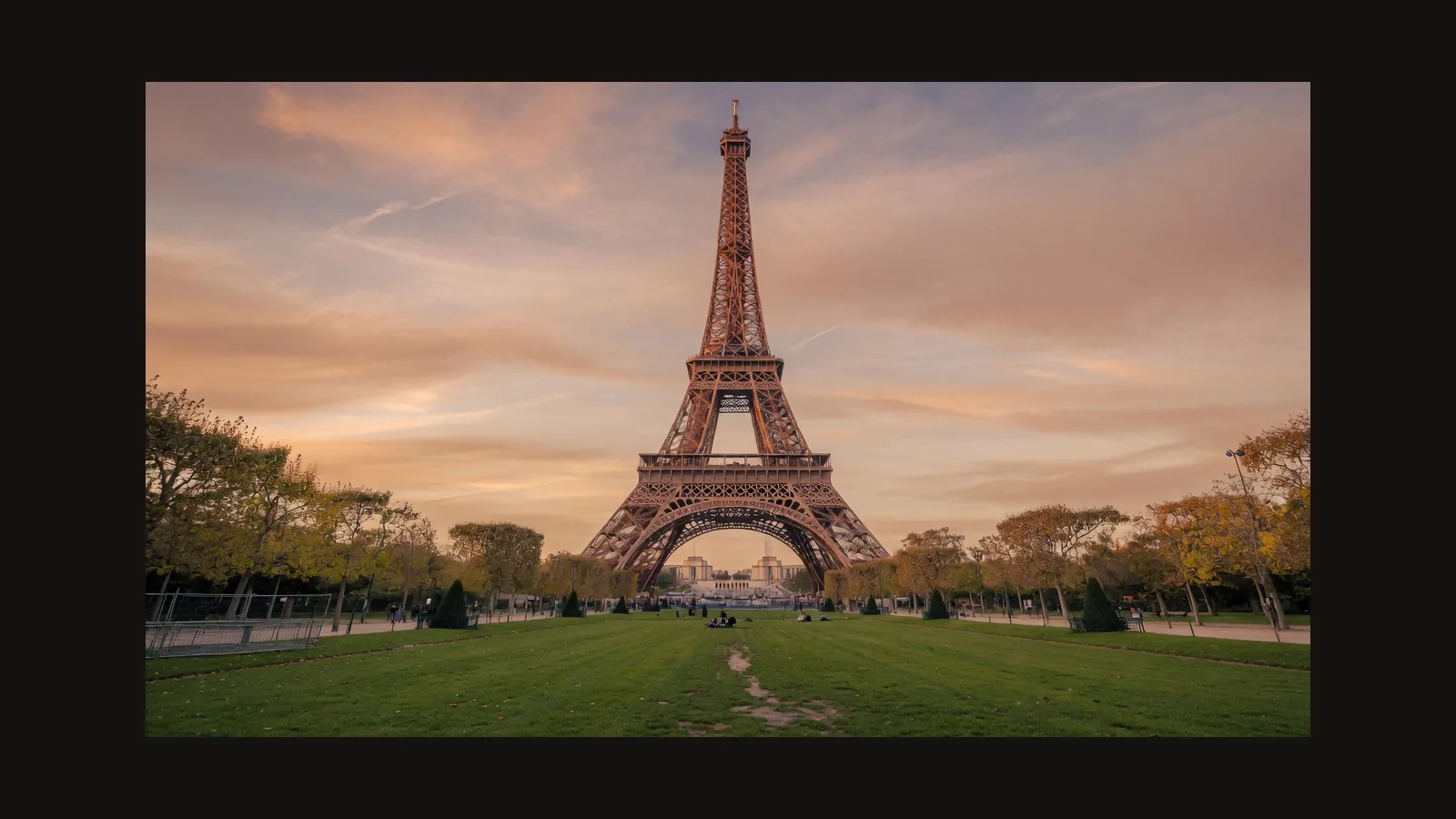
| Quick Facts | Detail |
|---|---|
| Built: 1887–1889 | |
| Designer: Gustave Eiffel (with engineers Maurice Koechlin and Émile Nouguier) | |
| Height: 330 metres (including antenna) — the tallest structure in Paris | |
| Weight: 7,300 tonnes of iron | |
| Rivets: 2.5 million | |
| Annual visitors: ~7 million (most-visited paid monument in the world) | |
| UNESCO: Part of the "Banks of the Seine" World Heritage Site (1991) | |
| Original purpose: Temporary entrance arch for the 1889 Exposition Universelle |
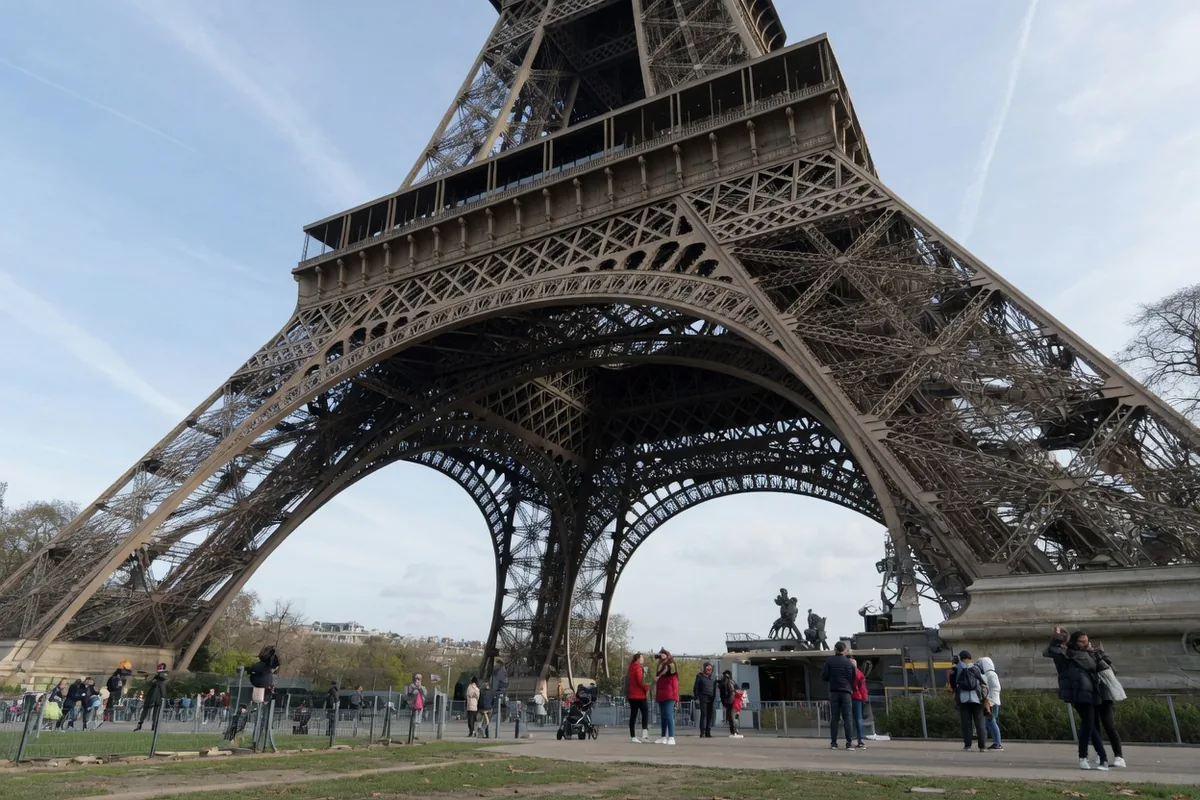
The Eiffel Tower is the single most recognisable structure on Earth. It was built to be temporary — a 300-metre iron arch marking the entrance to the 1889 World's Fair, celebrating the centenary of the French Revolution — and was supposed to be dismantled after twenty years. Instead, it became the defining symbol of Paris, France, and modernity itself. More than 250 million people have visited since it opened, and its silhouette is reproduced on everything from postcards to passport stamps to cheap keyrings sold by the million on the Champ de Mars.
The Construction (1887–1889)
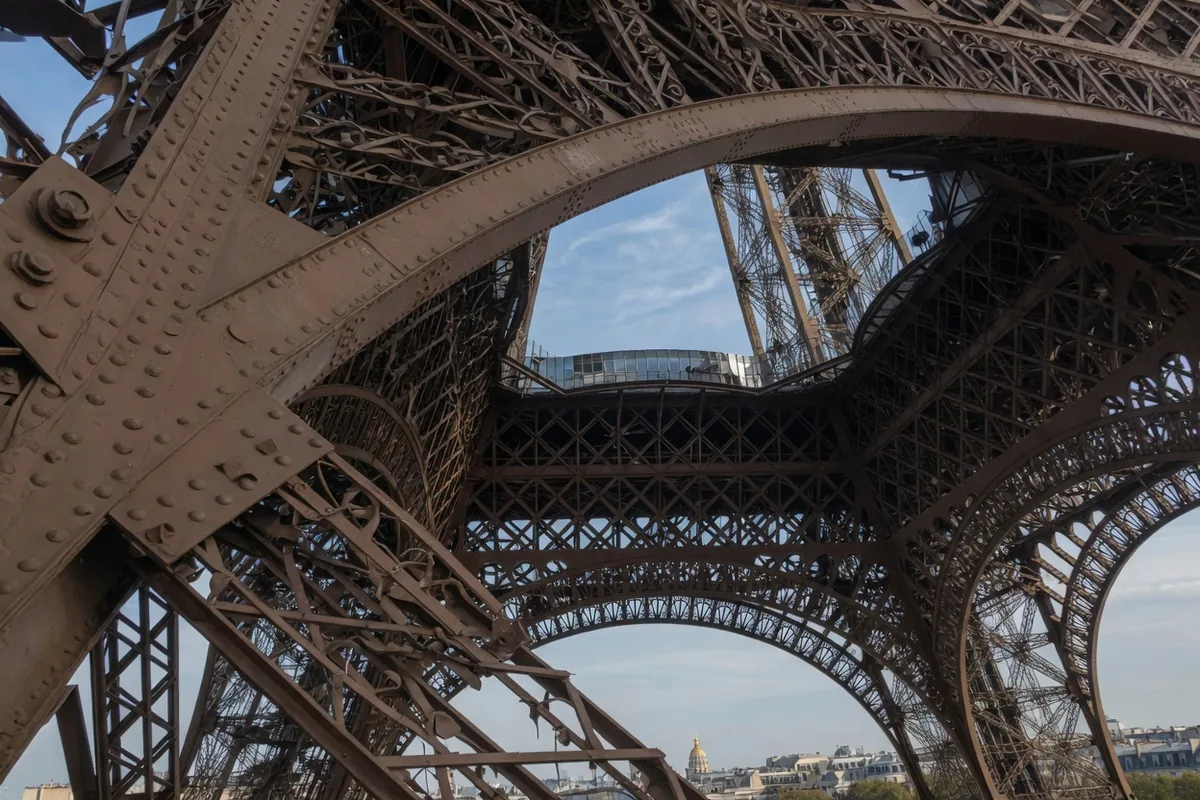
Gustave Eiffel was not primarily an architect — he was a bridge engineer. His company had built railway bridges, viaducts, and iron structures across Europe and South America (including the internal iron framework of the Statue of Liberty). The tower design was actually conceived by two of his senior engineers, Maurice Koechlin and Émile Nouguier, with architect Stephen Sauvestre adding the decorative arches and glass pavilions that soften the industrial silhouette.
Construction took two years, two months, and five days — a remarkable speed for a structure that remained the world's tallest for forty-one years (until New York's Chrysler Building in 1930). Three hundred workers assembled 18,038 pieces of puddled iron, held together by 2.5 million rivets. Despite the dangerous heights, only one worker died during construction — and that was off-duty, showing the tower to his fiancée. Eiffel's safety record was exceptional by the standards of the era.
The tower was deeply controversial. A petition signed by prominent Parisians — including Guy de Maupassant, Alexandre Dumas fils, and Charles Garnier (architect of the Opéra) — called it a "metal asparagus," a "giant black smokestack," and a disgrace to the city's skyline. Maupassant famously ate lunch in the tower's restaurant every day, claiming it was the only place in Paris where he couldn't see the tower. The petition failed. The public loved it. Two million people visited during the 1889 Exposition alone.
Engineering & Structure
The tower consists of three levels accessible to the public:
- First floor (57 m): Glass floor, historical exhibits, restaurants including Madame Brasserie (Madame Brasserie)
- Second floor (115 m): Panoramic views, the Jules Verne restaurant (one Michelin star), gift shop
- Summit (276 m): Open-air observation deck, Gustave Eiffel's restored office, champagne bar
The iron lattice design is not merely elegant — it is structurally optimal. Eiffel's engineers used graphical statics to calculate the precise curvature of the four legs so that wind forces would be transmitted directly down the structure's profile. The result is a shape where every element resists compression rather than bending — making the tower extraordinarily efficient for its height. It sways no more than 12 cm in the strongest winds.
Every seven years, the tower is repainted by hand — a process requiring 60 tonnes of paint and eighteen months of work. The colour has changed over the decades; the current shade is a custom bronze called brun Tour Eiffel (Eiffel Tower brown), applied in three graduating tones (darker at the bottom, lighter at the top) to enhance the sense of height against the sky.
Practical Visitor Information
- Getting there: Métro Bir-Hakeim (Line 6) or Trocadéro (Lines 6, 9) for the classic photo angle
- Tickets: Book online at toureiffel.paris well in advance — queues can exceed two hours in summer
- Lift vs. stairs: Stairs to the second floor (674 steps, €11.80) are cheaper and faster than the lift (€18.80 to summit); summit access requires a lift
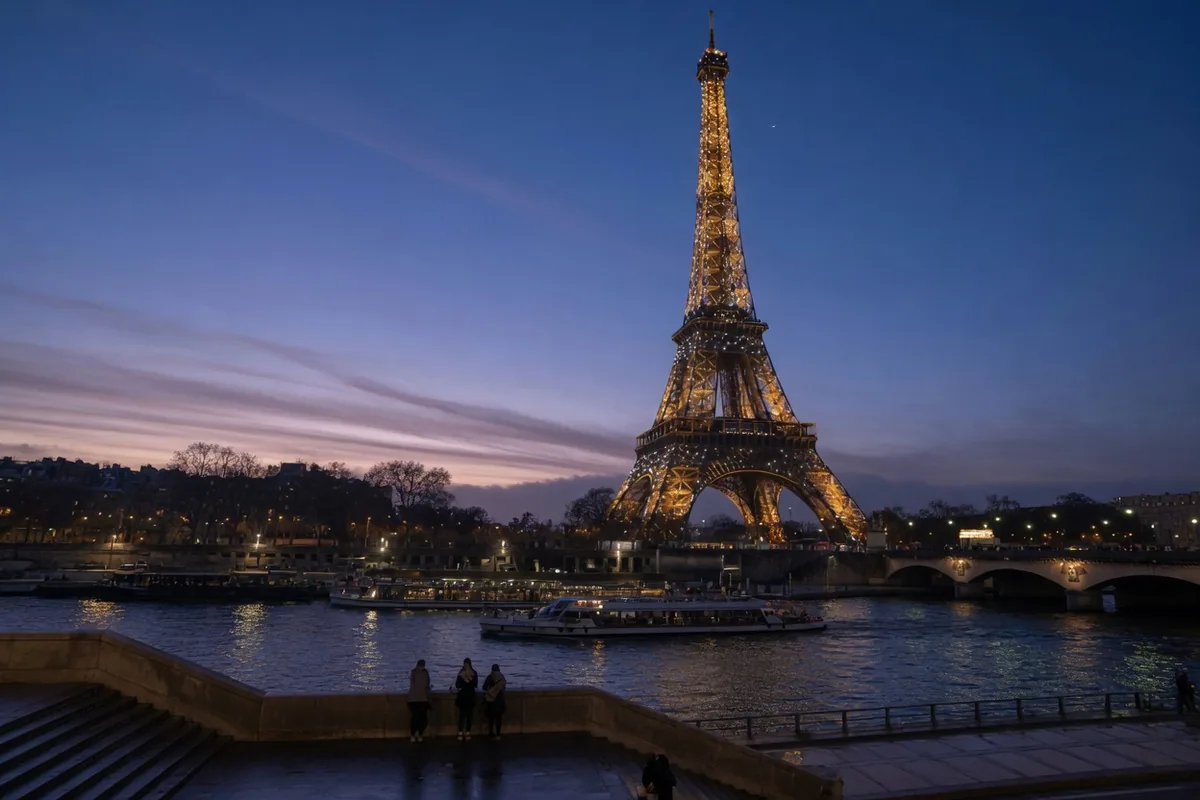
- Best time: First entry (9:30 AM) or evening (the tower sparkles for five minutes every hour after dark until 11:45 PM)
- Budget tip: The view from the Trocadéro esplanade across the river is free and arguably the best angle of the tower
The Eiffel Tower that was supposed to stand for twenty years has stood for 136. It was saved from demolition by its usefulness as a radio antenna — Eiffel installed a transmitter at the summit in 1904, and the tower played a critical role in intercepting German military communications during World War I. Today it hosts over 120 antennas for television, radio, and mobile communications, making it the most important broadcast tower in France.
On the ground
| Pin | Working note |
|---|---|
| Page | The Eiffel Tower |
| Desk | L'Esprit |
| First use | Read the pins, then one related page — not five |
| Confirm | Official site or ticket desk the week you go |
Hours, fares, and festival weeks move. A 2024 caption is not a 2026 desk. The Eiffel Tower sits in a country that is easy to over-plan and easy to under-prepare. The landmarks layer is where visitors collect names. This page is the opposite: what to do first, what to skip, and which sibling guide holds the rest.
France rewards a slow unit. One arrondissement, one valley, one appellation, one park trail. The photograph of five landmarks in five days is a real holiday, and it is also a queue with a passport. If you only have three nights, spend two of them in the same bed. The third night is for a train, not a third hotel.
Working a visit
Practical France is sockets (Type E/F, 230 V), tap water that is safe, pharmacies that are the real clinic for minor trouble, and a lunch hour that still closes a village. Cards work in cities. Cash still opens some park kiosks, some island boats, and some market stalls that have never seen contactless. A lightweight adapter belongs in the personal item, not the hold.
We will not write as if every reader is on a gap year, or as if every reader is in a palace hotel. We will not flatten 'the south' into one climate. We will not treat a strike day, a jour férié, or a Tuesday museum closure as a personality quirk of the French. They are calendars. Check them. Then use The Eiffel Tower as a pin, not as scripture.
Cross the five guides instead of cloning them. La Porte holds trains and the first week. La Terre holds weather and park gates. L'Esprit holds museum Tuesdays and the Revolution. La Table holds the market morning and the wine list. Le Moteur holds the Tour, the working week, and why August is empty in Paris and full on the coast.